
Care can translate text content for you:
-
Messages that a customer posted to a Care case in a language that differs from your preferred language
-
Your replies to the customer that have been sent in a language that differs from your preferred language
-
Your replies to the customer before you post them to the Care case
-
Internal notes that were added to a Care case in a language that differs from your preferred language
-
Case summaries generated by the AI summary tool
Translation options
When the translation functionality is enabled, you can see the following translation-related options in Care:
-
The “Show translation” option under messages from customers and under your replies that are written in a language that differs from your preferred language, and the options for editing and rating the suggested translation
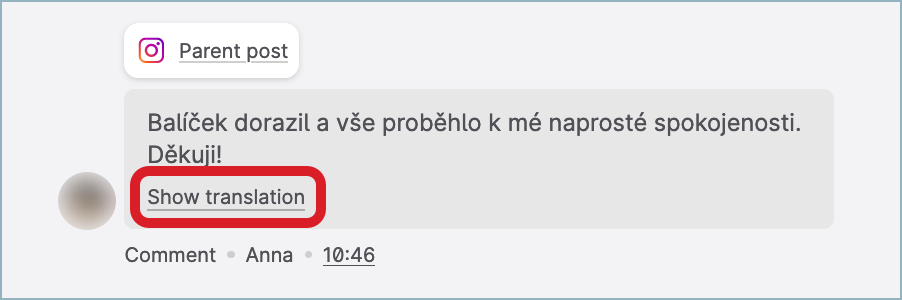
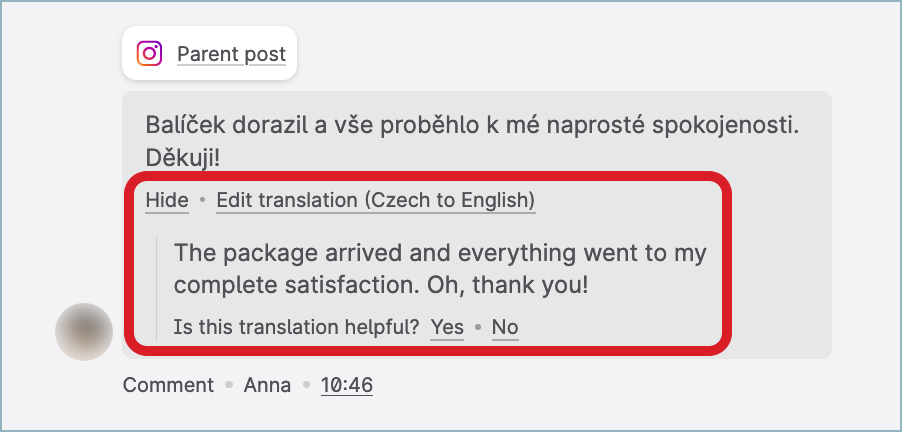
The “Show translation” option does not appear under the messages that are written in your preferred language. For example, if your preferred language is English, the “Show translation” option will not appear under the messages written in English. For more information about the preferred language, see “Change the preferred language” further in this article.
-
The “Show translation” option under internal notes that are written in a language that differs from your preferred language, and the options for editing and rating the suggested translation
The following options are available regardless of whether the translation functionality is enabled, as long as there is at least one language into which the text can be translated from the language it is written in:
-
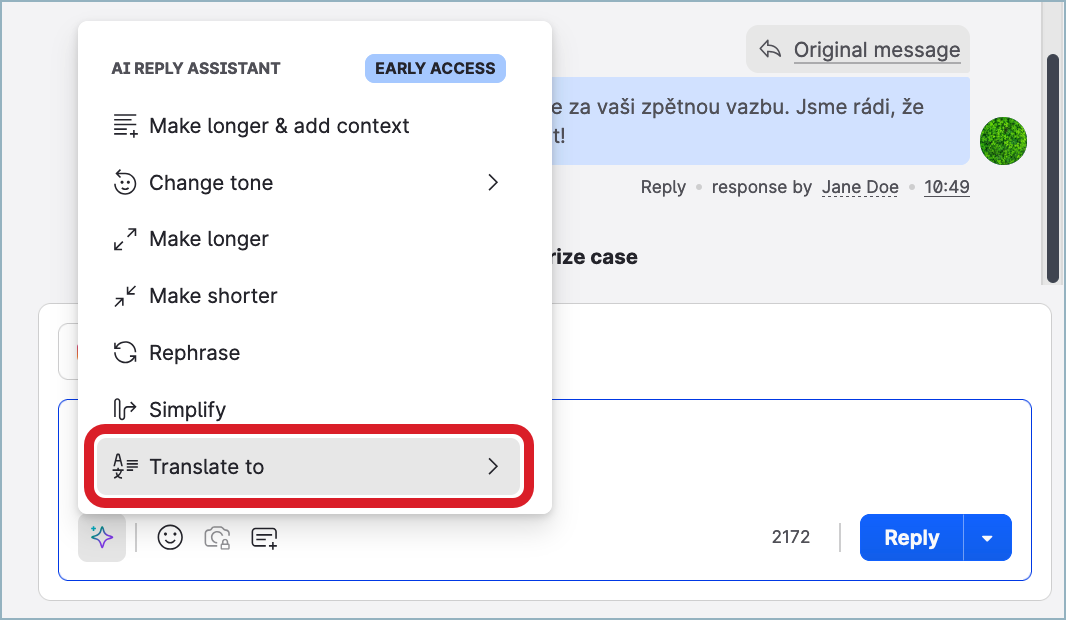
The “Translate to” option in the AI reply assistant menu (for more information about the AI assistant, see Respond to a Care Case)
-
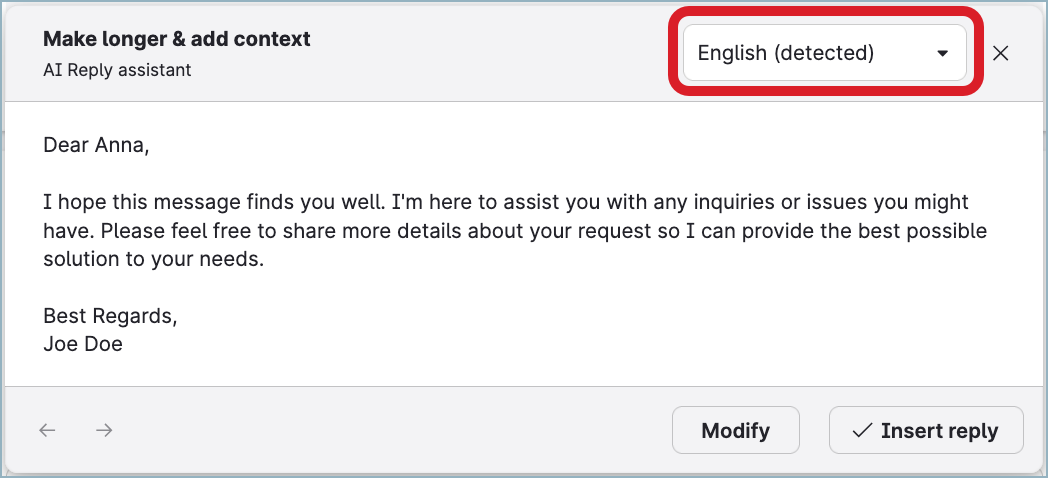
The language dropdown on the AI reply assistant pop-up dialog (for more information about the AI assistant, see Respond to a Care Case)
-
The “Translate to” option in the Modify menu of a case summary (for more information about case summaries, see Generate a Summary of a Care Case)
When the translation functionality is enabled and you set a preferred language, case summaries are generated in your preferred language (see Generate a Summary of a Care Case).
Supported languages
Translation is supported for 84 unique languages, which make 827 language translation pairs. A pair is determined by the source language, the target language, and the direction of translation (from -> into). For example, “English into Spanish” and “Spanish into English” are two different language pairs.
Not all languages support translation into every language. For example, while translating from Armenian into English is supported, translating from English into Armenian is not.
For more information about the supported language pairs, see Supported Languages for Translation in Care.
Enable translations in Care
By default, translations in Care are disabled. You can enable them for yourself.
-
The translation functionality is enabled at the level of an individual user in the Emplifi account, not at the level of the account itself. Enabling it for yourself does not affect this functionality for any other user in the Emplifi account.
-
Enabling and disabling translations in Care automatically enables and disables translations in Community (see Enable Translations in Community), and vice versa.
Steps:
-
In the main Care menu (see Use Standard Care Settings), click Care features -> Translations.
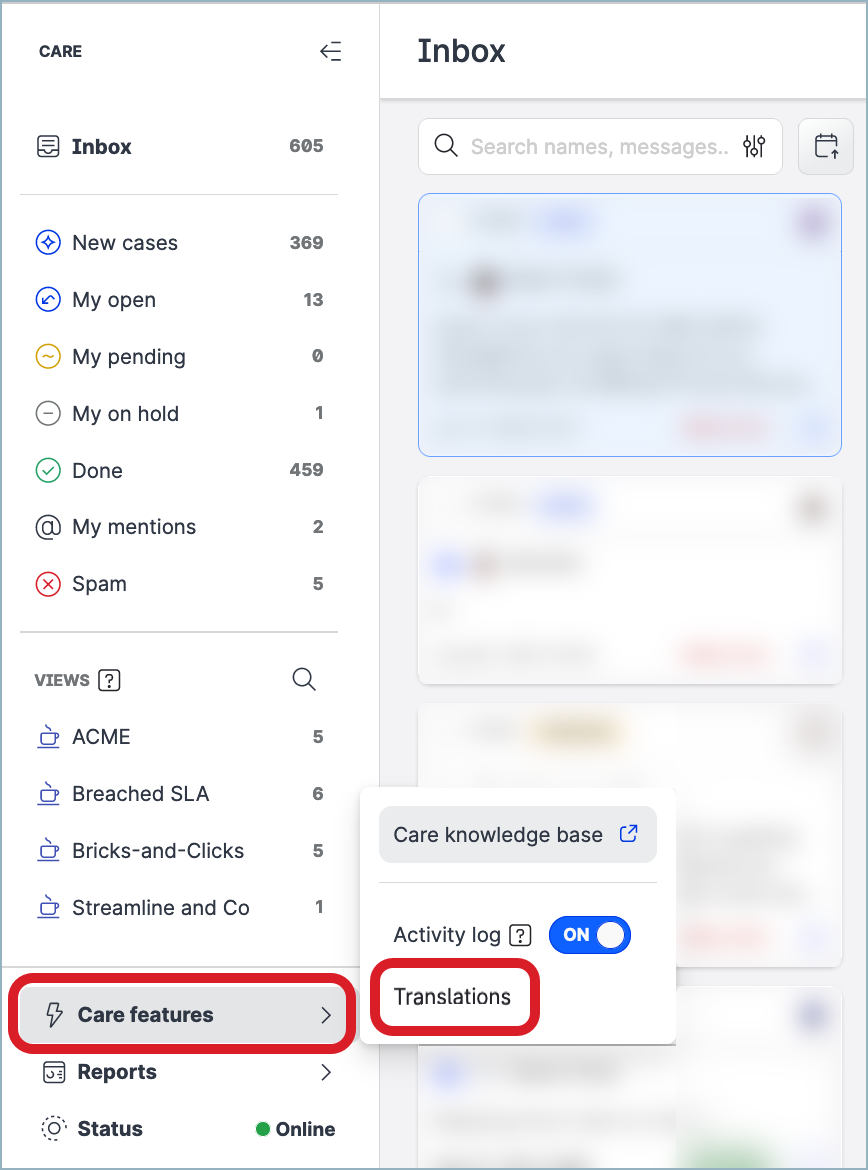
The translation menu opens.
-
Toggle the switch next to the Enable translation features option to ON.
-
From the Preferred language dropdown, select your preferred language.
The preferred language is the language into which Care will translate messages written in a different language.
You can change the preferred language at any time later (see “Change the preferred language“ further in this article). -
Click Save.
The translation menu closes. The translations are now enabled in Care. You can see translation-related options:-
The “Show translation” option under messages from customers and under your replies that are written in a language that differs from your preferred language, and the options for editing and rating the suggested translation
-
The “Show translation” option under internal notes that are written in a language that differs from your preferred language, and the options for editing and rating the suggested translation
-
The “Translate to” option in the AI reply assistant menu (for more information about the AI assistant, see Respond to a Care Case) (this option is available also when the translation functionality is disabled)
-
The language dropdown on the AI reply assistant pop-up dialog (for more information about the AI assistant, see Respond to a Care Case) (this option is available also when the translation functionality is disabled)
-
Translate a message
Steps:
-
Locate the message that you want to translate, and click Show translation.
The translation is generated and displayed.
-
If the language of the message is detected incorrectly, click Edit translation, and manually change the source language.
The translation is regenerated. -
(Optional) If you want to have the message translated into a different language than the preferred one, click Edit translation, and manually change the target language.
The translation is regenerated. -
(Optional) Help us improve the translation.
Click “Yes” or “No” to let us know whether this translation is helpful.
The submitted feedback is anonymous.
Translate an internal note
You can translate internal notes that other Care users added to a case in a different language, for example, when a case is handed over between teams that work in different languages.
Steps:
-
Locate the internal note that you want to translate, and click Show translation.
The translation is generated and displayed. The original text of the note is not changed. -
(Optional) Edit the translation or help us improve it. The options work the same way as for messages (see “Translate a message” earlier in this article).
Change the preferred language
The preferred language is the language into which Care will translate messages from customers written in a different language.
Changing the preferred language in Care automatically changes it in Community (see Enable Translations in Community), and vice versa.
Steps:
-
In the main Care menu (see Use Standard Care Settings), click Care features -> Translations.
The translation menu opens.
-
From the Preferred language dropdown, select the new preferred language.
-
Click Save.
The translation menu closes. The new preferred language is set.