SpeedFlex uses SVG icons. The color fill for each is defined by CSS and based on icon type. You can use our set of icons, or specify your own SVG code to be used for each icon.
Icon List
|
Icon |
Icon Name |
Where the Icon is Used |
|---|---|---|

|
arrow-fill |
|

|
back arrow |
|

|
caret-down |
|

|
caret-left |
|

|
caret-right |
|

|
check |
|

|
checkbox-off |
|

|
checkbox-on |
|

|
close |
|

|
controls |
|

|
delete |
|

|
error |
|

|
flag-off |
|

|
flag-on |
|

|
helpful-off |
|

|
helpful-on |
|

|
info |
|

|
more-H |
|

|
next-arrow |
|

|
options-collapse |
|

|
options-collapse |
|

|
photo |
|

|
question |
|

|
quote |
|

|
reply |
|

|
search |
|

|
social-Facebook |
|

|
social-Pinterest |
|

|
social-twitter |
|

|
star-empty |
|

|
star-full |
|

|
star-half |
|

|
unhelpful-off |
|

|
unhelpful-on |
|

|
video |
|

|
vote-off |
|

|
vote-on |
|

|
write |
|
Preparing Custom Icons
SVG (scalable vector graphic) is a web-friendly graphics format which is infinitely scalable, versatile, and manipulable with code like CSS. Instead of having to generate multiple sizes and colors of icons in PNG format, one SVG icon can be scaled to any size and filled with any color just by using CSS. This saves your designer(s) time, as well as bandwidth on your site.
To help your custom icons look great in our widgets, please follow the guidelines below:
-
Make sure all grouped shapes/strokes/fills are expanded (often referred to as “expand appearance” or “expand” in vector design programs).
-
Do not use masks to clip areas of the shape.
-
Icons should be square in dimension. If the icon shape itself is not square, you can place it within a square artboard and use empty space to fill the dimension. Just remember to export the icon with the dimensions of the artboard.
-
Check to make sure that any open paths are joined.
-
Remove any “fill” attributes from your paths. Providing filled icons will prevent the CSS in our system from applying the appropriate theme colors to them. You can remove fills in your design program, or remove them directly from the SVG code. Fill attributes in your code will look like this:
fill="#73d2e6" fill-rule="evenodd"
Here’s an example of how two different types of icons might look in your design program:
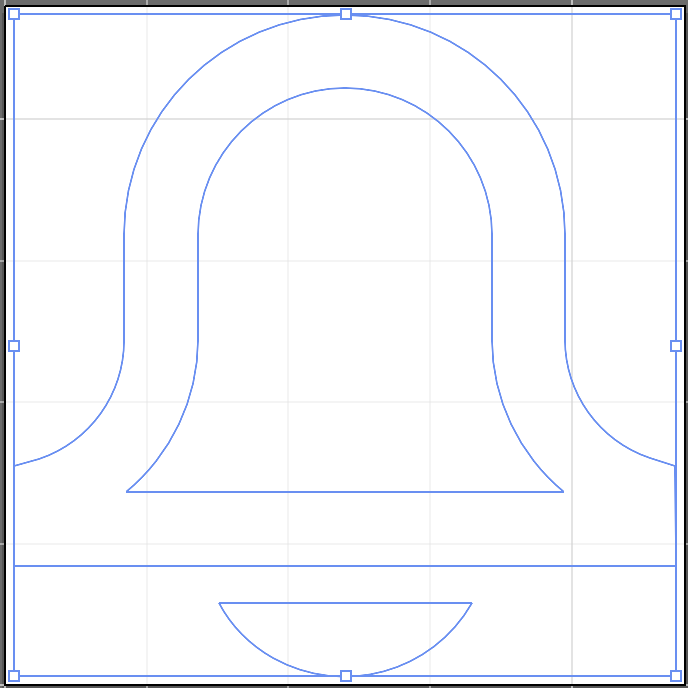
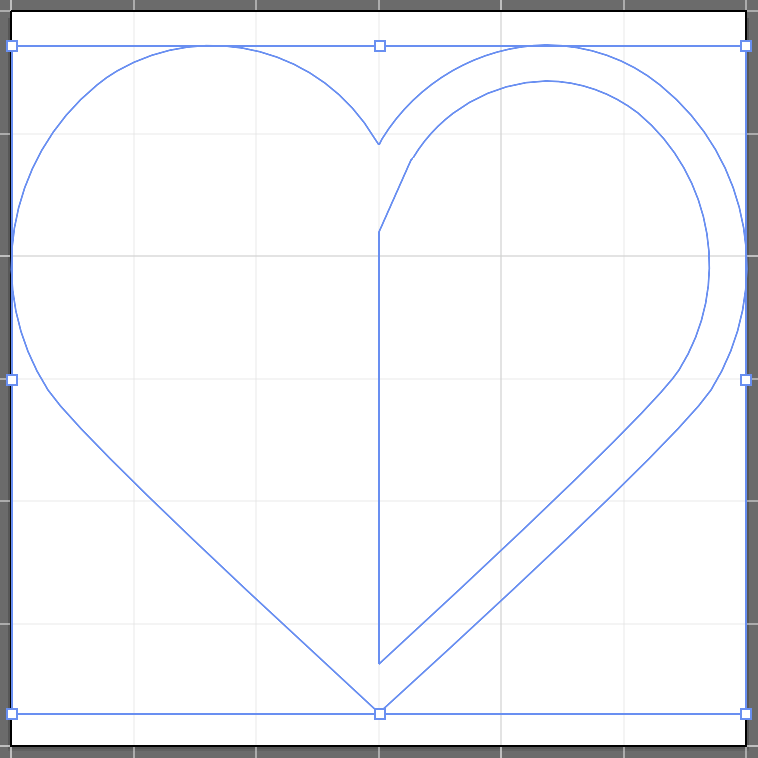
Notice that all paths are closed, there are no masks applied, and the icons are on a square artboard.
Here’s what the SVG code looks like for the bell icon (the example above on the left):
<svg xmlns="https://www.w3.org/2000/svg" viewBox="0 0 24 24"><title>Bell</title><path d="M4.25,17.19h15.5 a7,7,0,0,1-2.56-5.4V8.1a5.19,5.19,0,0,0-10.38,0v3.69A7,7,0,0,1,4.25,17.19Zm19.44,2.6H.31V16.26L1.2,16a4.39,4.39,0,0,0,3-4.17V8.1a7.79,7.79,0,0,1,15.58,0v3.69a4.39,4.39,0,0,0,3,4.17l.89.3ZM7.53,21.09h8.94a5.14,5.14,0,0,1-8.94,0Z" /></svg>
Notice that the SVG's “viewBox” attribute is set to a square dimension, and that the <path> tag does not have a “fill” attribute.
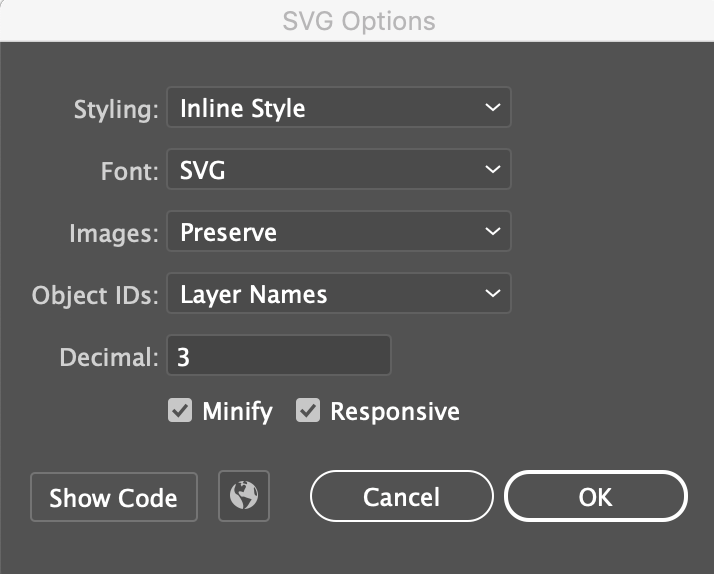
We highly recommend Adobe Illustrator’s SVG export tool (accessible via Export As… > SVG), which provides several options for optimizing your SVG code, as well as a code preview window. The following settings usually produce desirable results: